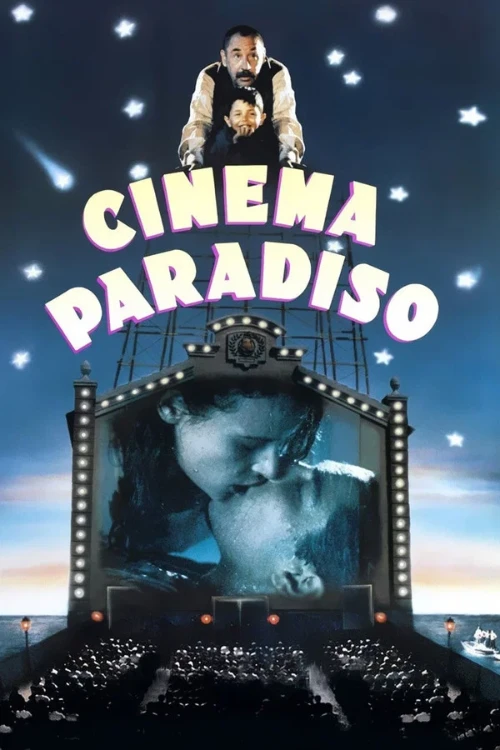
Directed by Giuseppe Tornatore, the 1988 film "Cinema Paradiso" (Nuovo Cinema Paradiso) stands as one of the most enchanting and heartfelt love letters ever written to the Seventh Art. The narrative begins with Salvatore, a successful film director, receiving news of the passing of Alfredo, the veteran projectionist from his childhood village. This solemn announcement prompts Salvatore to embark on a nostalgic journey back to his youth, where he first discovered the magic of the silver screen and forged a friendship that would define the course of his life.
Set in an impoverished post-World War II Sicilian town, the film brilliantly illustrates how cinema served as a unifying and healing sanctuary for the local community. The theater is not merely a venue, but a sacred space where villagers gather to weep, laugh, and temporarily escape the hardships of reality. At the heart of the story lies the tender mentor-protégé bond between young Toto and the wise Alfredo. Alfredo teaches Toto not only the craft of film projection, but also crucial life lessons about love, destiny, and the necessity of pursuing one's dreams beyond the confines of their hometown.
Elevated by Ennio Morricone’s iconic and hauntingly beautiful musical score, the film captures the passage of time, the nostalgia of lost childhood, and the bittersweet nature of memory with exquisite visual poetry. The legendary climax, featuring a collage of once-censored romantic kisses, remains one of the most emotionally triumphant sequences in cinematic history. Cinema Paradiso is a timeless celebration of art, love, and the enduring power of human connection.