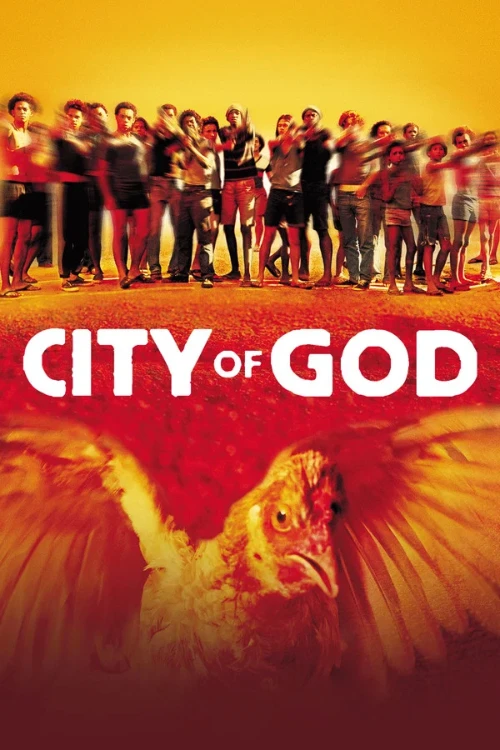
Brazil, 1960s, City of God. The Tender Trio robs motels and gas trucks. Younger kids watch and learn well...too well. 1970s: Li'l Zé has prospered very well and owns the city. He causes violence and fear as he wipes out rival gangs without mercy. His best friend Bené is the only one to keep him on the good side of sanity. Rocket has watched these two gain power for years, and he wants no part of it. he keeps getting swept up in the madness. All he wants to do is take pictures. 1980s: Things are out of control between the last two remaining gangs...will it ever end? Welcome to the City of God.
Directed by Fernando Meirelles and Kátia Lund, City of God (Cidade de Deus) delivers a gripping and unyielding chronicle of survival within the crime-ridden slums of Rio de Janeiro. Spanning from the late 1960s to the early 1980s, the film follows the contrasting trajectories of two young men growing up in an environment where violence is an inescapable reality. On one path is Rocket (Buscapé), an observant aspiring photographer seeking a way out of the ghetto, while on the other is Li'l Zé (Zé Pequeno), a ruthless ambition-driven figure who climbs the ladder of the drug underworld to establish absolute control.
City of God distinguishes itself not only through its kinetic editing and vibrant cinematography but also through its raw, documentary-like authenticity. Despite depicting severe brutality, the film utilizes an energetic visual rhythm and immersive soundtrack that draw the audience directly into the chaotic reality of the favela. With non-professional actors delivering deeply authentic performances, the narrative vividly illustrates how systemic poverty and institutional neglect foster a self-perpetuating cycle of violence. It remains a timeless masterpiece of world cinema that explores the delicate line between choice, destiny, and survival.