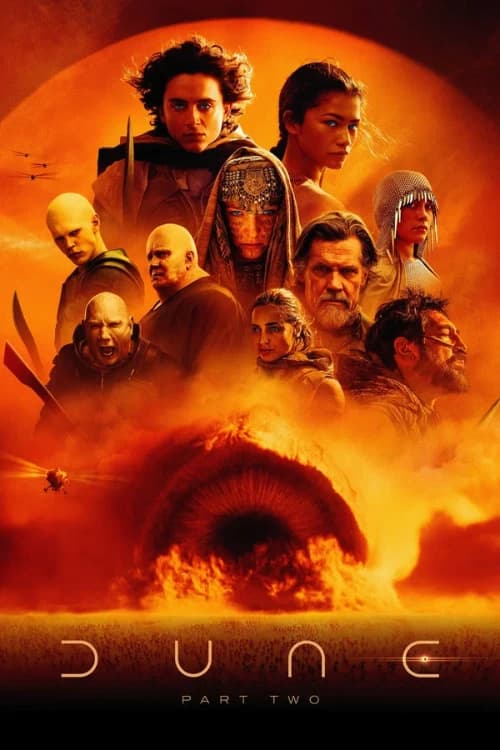
A mythic and emotionally charged hero's journey, "Dune" tells the story of Paul Atreides, a brilliant and gifted young man born into a great destiny beyond his understanding, who must travel to the most dangerous planet in the universe to ensure the future of his family and his people. As malevolent forces explode into conflict over the planet's exclusive supply of the most precious resource in existence-a commodity capable of unlocking humanity's greatest potential-only those who can conquer their fear will survive.
Denis Villeneuve’s adaptation of Frank Herbert’s seminal sci-fi masterpiece—long deemed "unfilmable"—is nothing short of a cinematic triumph. Dune: Part One does not merely tell a story; it submerges the audience into a tangible, awe-inspiring universe defined by blinding desert dust, the allure of spice, and monumental scale. The film's primary strength lies in its ability to convey the staggering grandeur of its lore through breathtaking visual and auditory craftsmanship. Greig Fraser’s masterful cinematography combined with Hans Zimmer’s unorthodox, hauntingly hypnotic score creates an immersive experience that feels both ancient and futuristic.
Narratively, the film functions as a meticulous prologue to a grand epic. As Paul Atreides navigates the heavy burden of destiny, prophetic visions, and lethal feudal politics, the story prioritizes world-building and psychological depth over relentless action pacing. Timothée Chalamet delivers a subtly compelling performance as Paul, while Rebecca Ferguson grounds the film with an emotionally intense portrayal of Lady Jessica. While the movie’s nature as a foundational first chapter might leave some yearning for a more self-contained resolution, Villeneuve’s patient and uncompromising vision gives Arrakis the cinematic scale and reverence it truly deserves.