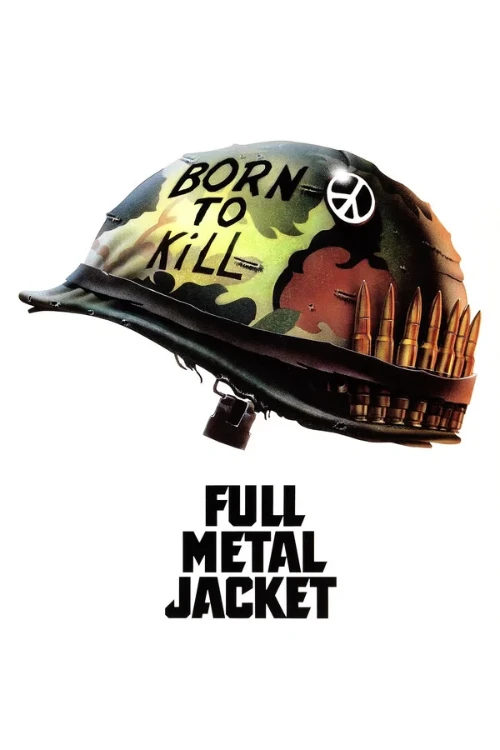
Presented in two distinct segments, the film explores the psychological toll of the military mindset and the brutality of warfare on Vietnam-era Marines, beginning with a group of recruits enduring merciless basic training under the tyrannical Gunnery Sergeant Hartman, and shifting to the front lines as one of those recruits, Joker, covers the chaotic horrors of the Tet Offensive as a military correspondent for Stars and Stripes.
Stanley Kubrick’s 1987 masterpiece Full Metal Jacket stands as one of the most uncompromising examinations of war, psychological conditioning, and the systematic dehumanization of the individual. Split sharply into two distinct acts, the narrative meticulously dissects both the manufacturing of a soldier and the subsequent moral void of the battlefield.
The first half unfolds within the suffocating confines of the Parris Island Marine boot camp. Gunnery Sergeant Hartman’s relentless verbal and psychological abuse strips the recruits of their civilian identities to mold them into lethal instruments. Through the devastating descent of Private "Gomer Pyle" Lawrence, Kubrick captures the breaking point of the human psyche under institutional cruelty with chilling precision.
The second act transitions to the ruins of Vietnam, exploring the senselessness of war through the detached perspective of Private Joker. The stark juxtaposition of Joker wearing a peace sign pin while sporting "Born to Kill" on his helmet encapsulates Kubrick’s core theme: the fundamental duality of man and the profound absurdity of armed conflict. Rather than glorifying combat, the film illustrates moral ambiguity, alienation, and the grim reality of survival.
Kubrick’s symmetrical visual compositions, disciplined pacing, and sharply ironic soundtrack choices present the brutality of warfare with clinical detachment. Full Metal Jacket transcends the conventional war genre to deliver a timeless, devastating critique of institutional violence and the fragility of the human spirit.