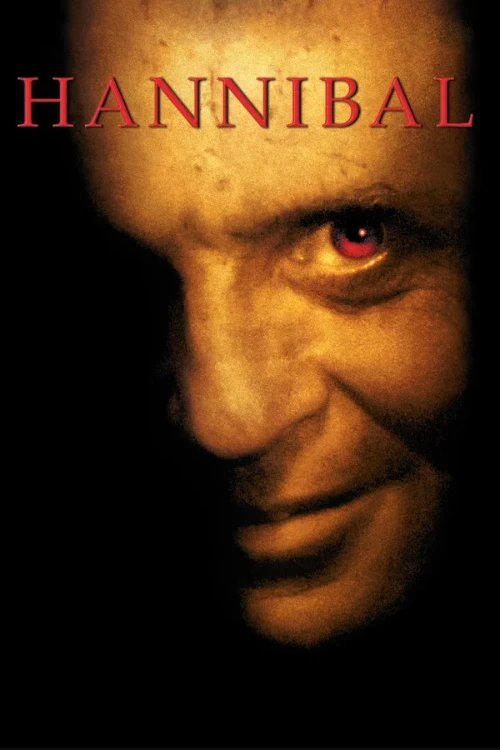
The final chapter of the Dr. Hannibal Lecter quadrilogy, the murdering cannibal. He is presently in Italy, and works as a curator at a museum. Clarice Starling (Julianne Moore), the F.B.I. Agent who he aided to apprehend a serial killer, was placed in charge of an operation, but when one of her men botches it, she's called to the mat by the Bureau. One high ranking official, Paul Krendler (Ray Liotta) has it in for her. But she gets a reprieve because Mason Verger (Gary Oldman), one of Lecter's victims who is looking to get back at Lecter for what Lecter did to him, wants to use Starling to lure him out. When Lecter sends her a note, she learns that he's in Italy, so she asks the Police to keep an eye out for him. But a corrupt Policeman, who wants to get the reward that Verger placed on him, tells Verger where he is, but they fail to get him. Later, Verger decides to frame Starling, which makes Lecter return to the U.S., and the race to get Lecter begins.
Directed by Ridley Scott, the 2001 film "Hannibal" brings one of cinema’s most iconic characters back to the big screen through a distinctly different aesthetic lens. Departing from the claustrophobic psychological tension of "The Silence of the Lambs," this installment shifts its focus toward the historic grandeur of Florence, baroque details, and an operatic sensibility. The uncanny balance Dr. Hannibal Lecter strikes between refinement and savagery becomes a visual feast under Scott’s masterful direction.
Taking over the role of Clarice Starling from Jodie Foster, Julianne Moore brings a hardened, weary, yet resilient presence to the character. Anthony Hopkins remains mesmerizingly charismatic as Lecter, effortlessly commanding the screen once again. Gary Oldman, buried under unsettling prosthetics as the vengeful victim Mason Verger, adds a sinister layer of darkness to the narrative.
Rather than matching the tight psychological depth of its predecessor, the film leans into visual splendor, poetic depictions of violence, and an intense game of cat and mouse. Supported by a rich score and stunning Italian cinematography, "Hannibal" stands out as an operatic revenge story rather than a pure psychological thriller.