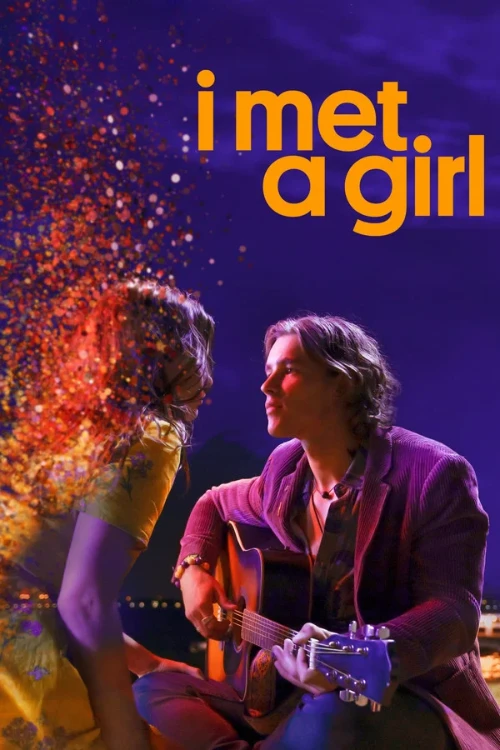
Devon is schizophrenic, and his brother struggles with his illness. Life is a roller-coaster for Devon, and during a particularly rough period, he finds himself standing on the edge of a building, contemplating ending it all. However, before he makes a decision, he falls. When he regains consciousness, he is with Lucy, and they have an amazing day together. But the next day, she is gone. Devon becomes obsessed with reaching Sydney, where he believes she is, and disappears. His brother grows worried and tries to find him. The question is whether Lucy is real or just a figment of Devon's schizophrenic dreams.
I Met a Girl is an emotionally resonant romantic drama that diverges from conventional genre tropes by examining connection through the lens of psychological vulnerability. The story revolves around Devon (Brenton Thwaites), an aspiring musician living with schizophrenia, who falls instantly for Lucy (Lily Sullivan)—an impulsive, enigmatic woman who leaves behind only fleeting clues before vanishing. The central ambiguity of whether Lucy is real or merely a projection of Devon’s unmedicated mind transforms a cross-country journey into a poignant quest for identity and acceptance.
Director Luke Eve effectively utilizes the vast Australian landscape as a visual extension of Devon’s internal state. The dynamic use of warm color palettes and evocative music captures the protagonist's heightened perception, allowing the audience to experience the world through his subjective reality. Brenton Thwaites delivers an earnest, grounded performance, bringing warmth and vulnerability to a role that avoids turning mental illness into a simplistic plot device.
While the narrative occasionally falters in its pacing and leaves a few supporting dynamics slightly underdeveloped, the film succeeds through its compassionate tone and heartfelt core. I Met a Girl stands out as a sincere, visually expressive, and touching exploration of love, perception, and healing.