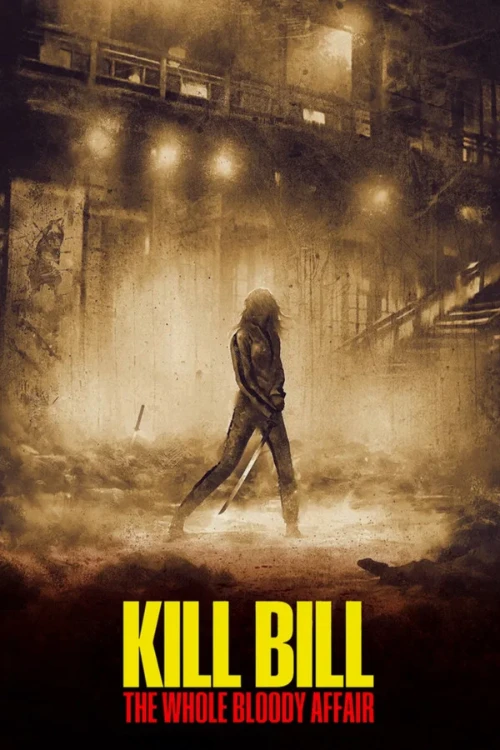
Quentin Tarantino’s most magnificent revenge epic, "Kill Bill", reached theaters in two separate volumes, yet the director’s original vision achieves its definitive form in "Kill Bill: The Whole Bloody Affair". Spanning over four hours of uninterrupted storytelling, this complete work seamlessly fuses Eastern and Western cinematic traditions, East Asian martial arts folklore, and spaghetti western aesthetics into a single, cohesive crucible. While the original theatrical release divided the narrative into two distinct tonal halves—one focused heavily on martial arts action and the other on dramatic character depth—this unified cut flows in a single breath as an indelible work of art.
At the core of the story lies Beatrix Kiddo, "The Bride," whose survival from a brutal wedding massacre launches a calculated journey of retribution. In this extended cut, her quest becomes far more than a simple revenge saga; it transforms into a sensory triumph. "The Whole Bloody Affair" elevates the experience by integrating the fully uncensored, vibrant anime sequence, eliminating the abrupt cliffhanger pause between volumes, and presenting the iconic House of Blue Leaves battle in its intended gory splendor. Tarantino’s mastery of rhythmic editing shines brightest when music dictates the narrative, turning every katana stroke, musical note, and camera movement into a carefully orchestrated ballet.
The spine of the film remains Uma Thurman’s iconic performance, brilliantly balancing raw grief, ruthless vengeance, and maternal resolve. Coupled with an unforgettable gallery of supporting characters and assassins—each granted space within the overarching mythos—the film maintains an astonishing momentum throughout its entire runtime. "Kill Bill: The Whole Bloody Affair" is not merely an extended version of a classic; it is the definitive presentation of Tarantino’s visual genius and one of the finest cinematic achievements of modern filmmaking.