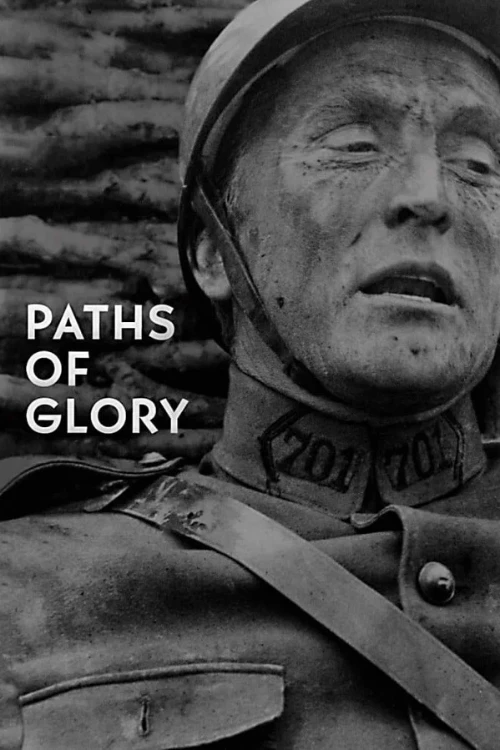
The futility and irony of the war in the trenches in WWI is shown as a unit commander in the French army must deal with the mutiny of his men and a glory-seeking general after part of his force falls back under fire in an impossible attack.
Stanley Kubrick’s 1957 masterpiece Paths of Glory stands as one of the most poignant and scathing anti-war films in the history of cinema. Set during the brutal reality of World War I, the narrative revolves around a French general’s arrogant decision to order a suicidal assault on a heavily fortified German position known as "The Ant Hill." When the doomed attack inevitably fails, the military high command, desperate to shield their own incompetence and preserve their career ambitions, scapegoats three innocent soldiers, charging them with cowardice and putting them on trial before a court-martial. Kirk Douglas delivers a towering performance as Colonel Dax, an honorable commander and former defense lawyer who valiantly fights the corrupt military hierarchy to save his men from execution.
Kubrick’s directorial virtuosity is evident in every frame, particularly through his iconic, claustrophobic tracking shots navigating the muddy, narrow trenches. The film creates a haunting contrast between the gruesome horror of the battlefield and the lavish, opulent châteaux where high-ranking officers casually trade human lives for medals and prestige. Beyond its visceral war depiction, Paths of Glory is a profound critique of institutional hypocrisy, moral corruption, and the tragic devaluation of individual human life within bureaucratic machines. Masterfully paced and capped by an unexpectedly tender, emotionally devastating final scene, the film remains an indelible cinematic landmark.