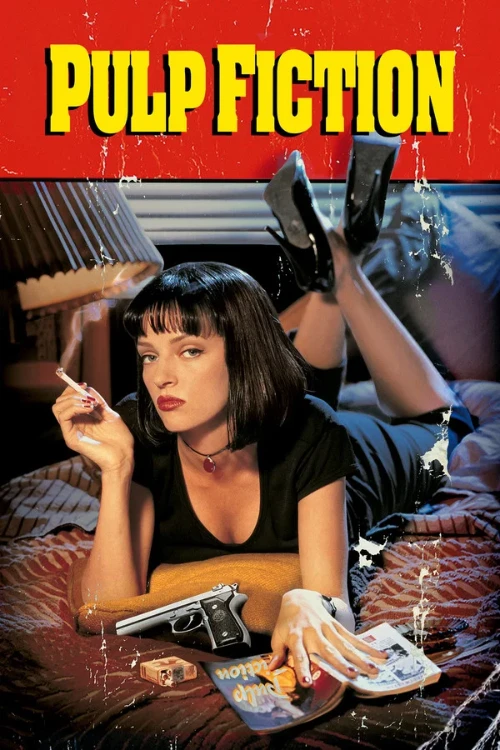
Jules Winnfield (Samuel L. Jackson) and Vincent Vega (John Travolta) are two hitmen who are out to retrieve a suitcase stolen from their employer, mob boss Marsellus Wallace (Ving Rhames). Wallace has also asked Vincent to take his wife Mia (Uma Thurman) out a few days later when Wallace himself will be out of town. Butch Coolidge (Bruce Willis) is an aging boxer who is paid by Wallace to lose his fight. The lives of these seemingly unrelated people are woven together comprising of a series of funny, bizarre and uncalled-for incidents.
Quentin Tarantino’s 1994 masterpiece, Pulp Fiction, stands as one of the most iconic and pivotal works in cinema history. Rewriting the rules of traditional storytelling through its non-linear narrative structure, the film seamlessly weaves interconnected crime tales with dark humor, stylized violence, and philosophical dialogue. The director’s absolute mastery over pop culture enables him to create a distinct rhythm and tone in every single scene.
The film’s greatest strength lies in its remarkably deep characters and brilliantly crafted dialogue. From Vincent Vega and Jules Winnfield’s mundane conversations about European pop culture right before a hit, to Mia Wallace’s unforgettable dance sequence, every moment leaves a lasting imprint on the viewer’s mind. Stellar performances by Samuel L. Jackson, John Travolta, and Uma Thurman lay bare human flaws and redemption amidst a gritty underworld, while violence serves as an aesthetic device that keeps the pacing consistently high.
Ultimately, Pulp Fiction is a cinematic triumph that pushes the boundaries of the seventh art through its masterful soundtrack choices, sharp editing, and unforgettable atmosphere. Decades after its release, it continues to retain its freshness, brilliance, and profound influence on modern cinema.