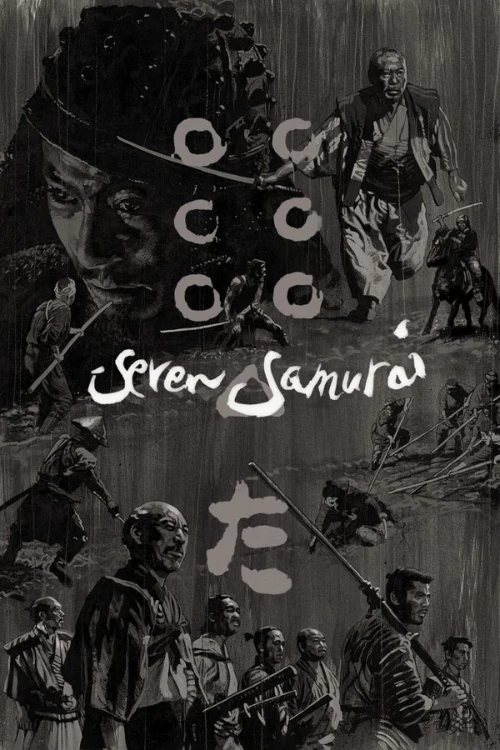
Akira Kurosawa’s 1954 masterpiece, Seven Samurai (Shichinin no Samurai), stands as one of the most monumental achievements not only in Japanese cinema, but in global film history. The narrative centers on a desperate village of farmers repeatedly victimized by bandits, who pool their limited resources to hire seven masterless samurai for protection. While appearing on the surface to be a straightforward tale of defense, Kurosawa transforms this premise into a profound exploration of human nature, class division, and the cost of sacrifice.
Cinematographically, the film maintains a flawless balance between visceral action and intimate human drama. Kurosawa’s pioneering multi-camera setup, combined with his brilliant integration of natural elements like sweeping wind and torrential rain, imparts a kinetic rhythm to the visual storytelling. The climactic battle in the mud remains one of cinema's most harrowing and authentic depictions of chaotic warfare. Furthermore, the interplay between Takashi Shimura’s composed, wise leadership as Kambei and Toshiro Mifune’s volcanic, tragic performance as Kikuchiyo gives the narrative its powerful emotional anchor.
Ultimately, the film concludes on a bittersweet note, acknowledging that despite the tactical victory, it is the bound farmers—not the fallen samurai—who truly endure. Seven Samurai remains a timeless cornerstone of the seventh art, defined by its flawless pacing, deep character development, and narrative resonance.