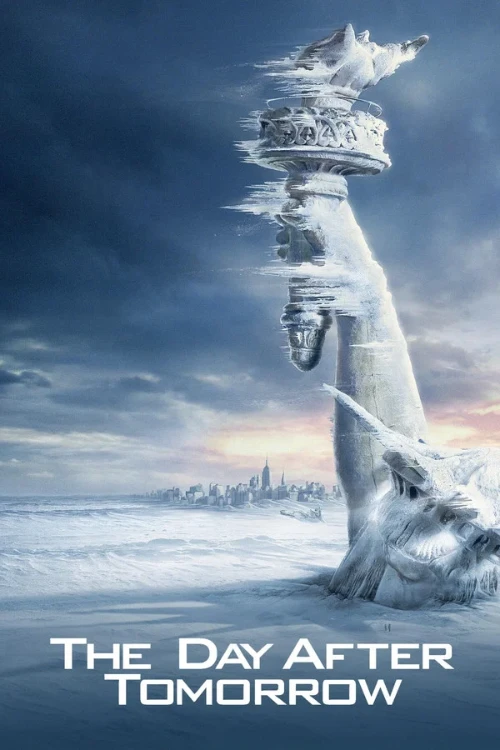
As Paleoclimatologist Jack Hall is in Antartica, he discovers that a huge ice sheet has sheared off. But what he does not know is that this event will trigger a massive climate shift that will affect the world population. Meanwhile, his son Sam is with friends in New York City to attend an event. There, they discover that it has been raining non-stop for the past three days, and after a series of weather-related disasters begin to occur all over the world, everybody realizes the world is about to enter a new Ice Age and the world population begins trying to evacuate to the warmer climates of the south. Jack makes a daring attempt to rescue his son and his friends who are stuck in New York City and who have managed to survive not only a massive wave but also freezing cold temperatures that could possibly kill them.
Directed by Roland Emmerich, "The Day After Tomorrow" stands as one of the most iconic disaster films of the 2000s, turning the terrifying prospect of climate change into a massive cinematic spectacle. The story explores a sudden, catastrophic shift in global weather patterns that plunges the planet into a new Ice Age, interweaving global devastation with a personal rescue mission between a father and his son. True to Emmerich's signature style, the film prioritizes visual grandiosity, pacing, and high stakes over strict scientific accuracy.
Visually and atmospherically impressive for its time, the film features unforgettable imagery, particularly the colossal tidal wave sweeping through New York City and the completely frozen Statue of Liberty. The narrative balances two core elements: the survival struggle of teenagers trapped inside the New York Public Library and the perilous trek of a paleoclimatologist, played by Dennis Quaid, braving the frozen expanse to reach his son. Beneath the action, the film also offers a sharp critique of political complacency and administrative denial when confronted with an ecological disaster.
While the story frequently stretches scientific logic and relies on familiar blockbuster tropes, it delivers precisely what it promises in terms of suspense, spectacle, and pure entertainment value. Driven by strong lead performances from Dennis Quaid and Jake Gyllenhaal, it remains a timeless classic in the disaster genre.