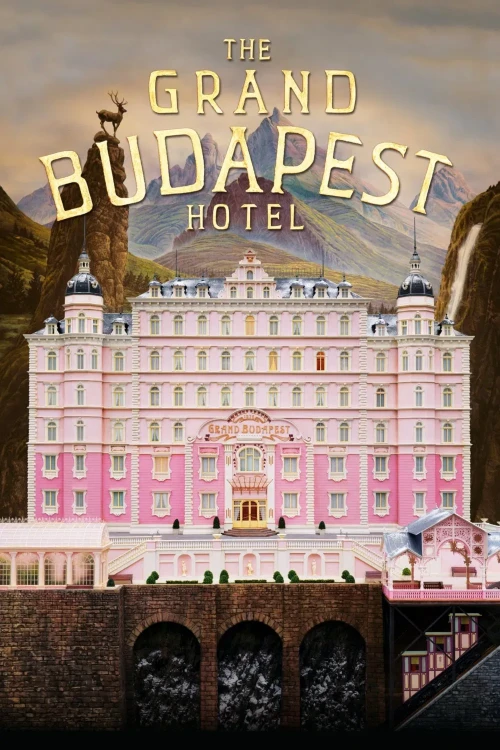
This movie recounts the adventures of M. Gustave, a legendary concierge at a famous European hotel between the wars, and Zero Moustafa, the lobby boy who becomes his most trusted friend. The story involves the theft and recovery of a priceless Renaissance painting and the battle for an enormous family fortune - all against the backdrop of a suddenly and dramatically changing continent.
As one of the most refined and enchanting masterpieces in Wes Anderson’s cinematic universe, The Grand Budapest Hotel invites the audience into a whimsical yet melancholic Europe during the interwar period. Inspired by the literary works of Stefan Zweig, the film's multi-layered narrative structure is not merely a visual triumph; it is a poetic elegy for a bygone era of elegance, courtliness, and a fading civilization.
Anderson’s signature symmetrical framing, vibrant pastel color palettes, and meticulously crafted set designs turn every single frame into a living painting. The unwavering camaraderie between the eccentric concierge Monsieur Gustave H., brilliantly portrayed by Ralph Fiennes, and his loyal lobby boy Zero provides both the energetic rhythm and the emotional backbone of the film. Disguised as a witty murder mystery and caper, the story seamlessly weaves a reflection on nostalgia and the rise of fascism with sharp, elegant humor. Alexandre Desplat’s iconic score perfectly complements this immersive atmosphere.
The Grand Budapest Hotel stands as a modern classic, impeccably balancing aesthetic perfection with a profound underlying sadness.