
▶ JustWatch
Currently available to stream, rent, or buy. JustWatch helps you easily find where you can legally watch your favorite movies and TV shows online.
Stream







Rent



Buy
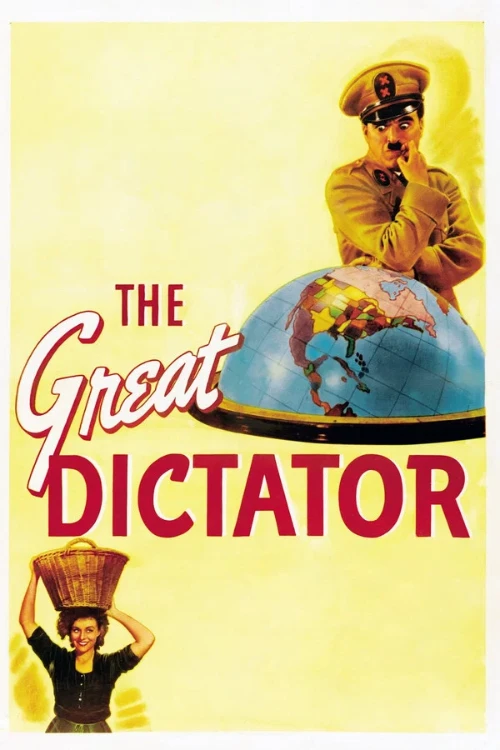
20 years after the end of WWI, in which the nation of Tomainia was on the losing side, Adenoid Hynkel has risen to power as the ruthless dictator of the country. He believes in a pure Aryan state and the decimation of the Jews. This situation is unknown to a simple Jewish Tomainian barber who has been hospitalized since a WWI battle. Upon his release the barber, who had been suffering from memory loss about the war, is shown the new persecuted life of the Jews by many living in the Jewish ghetto, including a washerwoman named Hannah with whom he begins a relationship. The barber is ultimately spared such persecution by Commander Schultz, whom he saved in that WWI battle. The lives of all Jews in Tomainia are eventually spared with a policy shift by Hynkel himself, who is doing so for ulterior motives. But those motives include a desire for world domination, starting with the invasion of neighboring Osterlich, which may be threatened by Benzino Napaloni, the dictator of neighboring Bacteria. Ultimately Schultz, who has turned traitor against Hynkel's regime, and the barber may be able to join forces to take control of the situation, using Schultz's inside knowledge of the regime's workings and the barber's uncanny resemblance to one of those in power.
Audience Reviews
Rate and Review

As Charlie Chaplin’s first fully synchronized sound film, The Great Dictator is far more than a brilliant political satire; it stands as one of the most courageous and profound humanist manifestos in cinematic history. Released in 1940 during the perilous early stages of World War II—at a time when the United States had not yet entered the conflict—the film fearlessly dissects fascism, hatred, and the absurdity of authoritarianism through a masterful blend of slapstick and poignant drama. Chaplin delivers a tour de force dual performance, portraying both the megalomaniacal dictator of Tomainia, Adenoid Hynkel, and a gentle, amnesiac Jewish barber. This stark duality illustrates the vast chasm between tyrannical megalomania and the fragile dignity of the common man. The iconic sequence in which Hynkel dances with an inflatable globe remains one of the medium’s most striking metaphors for the fragile vanity of absolute power. In contrast, the barber shop scene set to Brahms’ Hungarian Dance No. 5 demonstrates Chaplin’s peerless command of rhythm, choreography, and physical comedy. The climax of the film—the legendary final speech—transcends the narrative boundaries of fiction and speaks directly to the conscience of mankind. Chaplin passionately condemns greed, tyranny, and mechanization, championing universal brotherhood, liberty, and reason. With its impeccable comedic timing, rich subtext, and enduring ethical clarity, The Great Dictator remains an immortal masterpiece of world cinema.