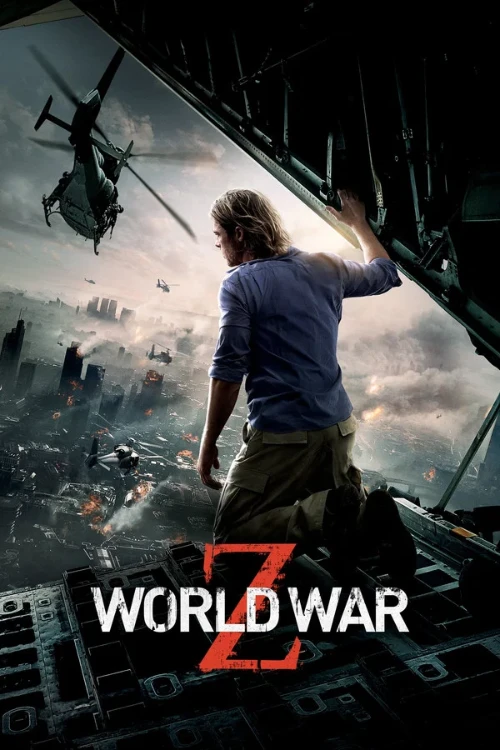
Life for former United Nations investigator Gerry Lane and his family seems content, until a sudden and mysterious global pandemic transforms human populations into rampaging, mindless hordes. After narrowly escaping the initial chaos, Lane is thrust into a high-stakes mission across the globe to trace the origins of the relentless contagion. As civilization teeters on the brink of collapse, he must brave unimaginable perils and impossible odds to uncover answers before humanity's time officially runs out.
Directed by Marc Forster, World War Z (2013) revitalizes the conventional zombie subgenre by framing its narrative within a sweeping, high-stakes geopolitical pandemic. Loosely inspired by Max Brooks’ acclaimed oral history novel, the film departs from the layered, multi-perspective sociopolitical structure of its source material to focus entirely on Gerry Lane (Brad Pitt), a seasoned former UN investigator navigating a fractured world to uncover the origin of a catastrophic outbreak. From its immediate and disorienting opening in Philadelphia, the narrative maintains a relentless, forward-moving momentum.
The production’s most striking visual achievement is its reimagining of the infected: aggressive, fast-moving entities that swarm with a terrifying hive-mind velocity. The sweeping set pieces—most notably the breach of the defensive fortifications in Jerusalem—translate the threat into a vast, tidal force of nature rather than isolated monster encounters. While the first two acts thrive on large-scale urban devastation and kinetic action, the final act pivots effectively into a quiet, suspenseful, and claustrophobic cat-and-mouse dynamic within a WHO research facility in Cardiff, providing a refreshing tonal contrast.
Brad Pitt anchors the story with a pragmatic and composed performance, grounding the high-octane spectacle in human vulnerability and quick-witted deduction. Although purists of the novel may miss the exhaustive geopolitical depth of the text, the film excels as a polished, high-tension disaster thriller propelled by sharp editing, immersive sound design, and an innovative visual approach to the undead.