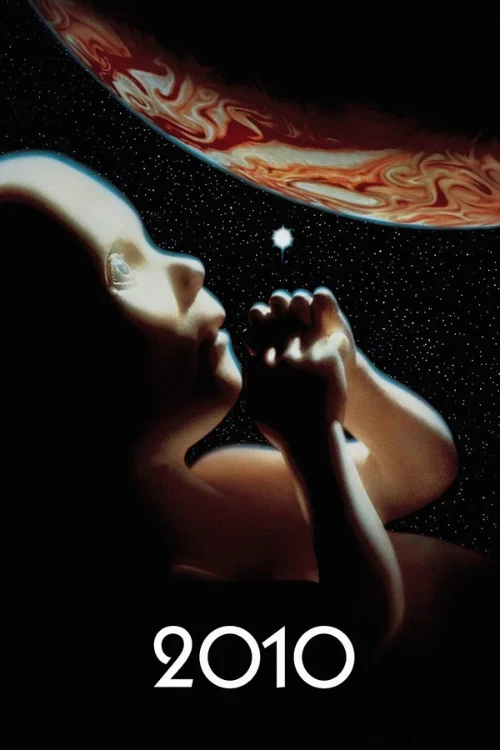
Set against the backdrop of escalating Cold War tensions on Earth, a joint American and Soviet crew embarks on a perilous mission to Jupiter to uncover what happened to the U.S.S. Discovery. As the expedition approaches the gas giant, the team must unravel the enigma of a colossal black monolith looming in orbit and determine the ultimate fate of HAL 9000, the ship's malfunctioning artificial intelligence.
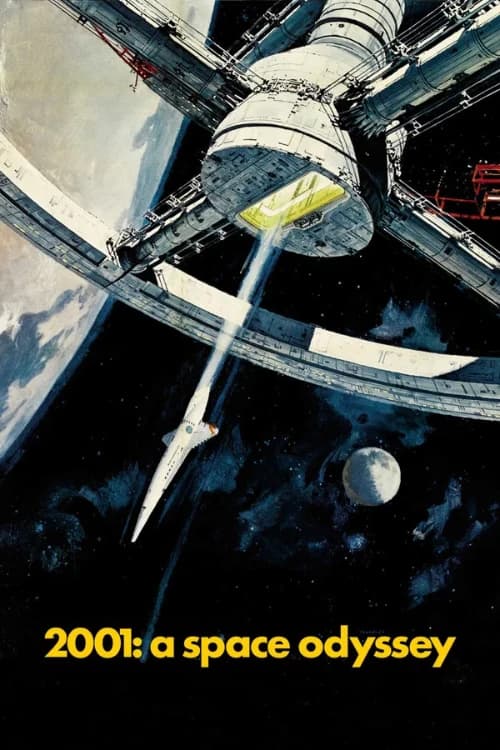
Directing a sequel to one of the most defining cinematic landmarks in history is a formidable endeavor. Rather than attempting to replicate Stanley Kubrick’s abstract mysticism and enigmatic visual poetry, director Peter Hyams charts a pragmatic course in 2010: The Year We Make Contact. Anchored in Arthur C. Clarke’s literary style, the film adopts a plot-driven, exposition-friendly approach that transposes Cold War geopolitics into the cold vacuum of space, framing a story of international collaboration against cosmic uncertainty.
Elevated by grounded performances from Roy Scheider, John Lithgow, and Helen Mirren, the story excels particularly in contextualizing the malfunction and tragedy of HAL 9000. Through impressive practical miniature effects, steady pacing, and genuine tension surrounding the derelict Discovery One, the film trades existential ambiguity for narrative resolution and emotional closure. While it lacks the transcendent grandeur of its predecessor, it stands as an intelligent, suspenseful, and dignified hard sci-fi entry that delivers an enduring message of global unity and evolutionary wonder.