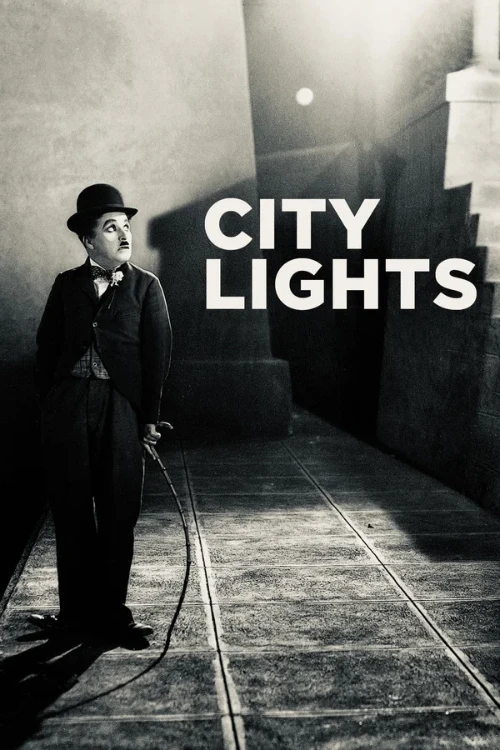
Charmingly simple story of The Little Tramp who meets a lovely blind girl selling flowers on the sidewalk who mistakes him for a wealthy duke. When he learns that an operation may restore her sight, he sets off to earn the money she needs to have the surgery. In a series of comedy adventures that only Chaplin could pull off, he eventually succeeds, even though his efforts land him in jail. While he is there, the girl has the operation and afterwards yearns to meet her benefactor. The tear-inducing closing scene, in which she discovers that he is not a wealthy duke but only The Little Tramp, is one of the highest moments in movies.
As one of the most graceful achievements in cinematic history, City Lights stands as Charlie Chaplin’s silent yet majestic masterpiece, crafted in defiance of the emerging talkie era. The narrative revolves around the Little Tramp’s tender connection with a blind flower girl. Leveraging the erratic generosity of an eccentric, wealthy alcoholic, the Tramp dedicates every resource to securing a surgery that will restore her sight, embodying an enduring testament to selflessness and human nobility. Resisting the industry's shift toward sound, Chaplin relies on the profound visual language of silent cinema, expertly weaving slapstick comedy with poignant melodrama.
Throughout the film, sequences such as the brilliantly choreographed boxing match and the sharp commentary on social disparity enrich the storytelling without a single word of dialogue. The iconic closing scene, universally regarded as one of the most moving climaxes in motion picture history, delivers an emotional resonance that lingers long after the screen fades to black. City Lights is not merely a timeless comedy; it is an immortal poetic tribute to unconditional devotion and empathy.