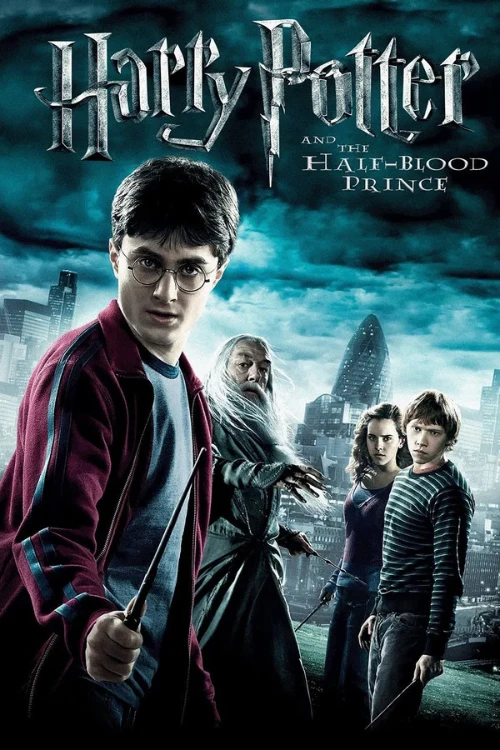
During Harry Potter's sixth year at Hogwarts, he finds a book that once belonged to the mysterious Half-Blood Prince that earns him the respect of his new Potions professor Horace Slughorn. In addition, Dumbledore must prepare Harry for the ultimate final confrontation by finding out the secret behind Voldemort's power. Meanwhile, a hidden enemy waits in the shadows to carry out a mission given to him by the Dark Lord.
The sixth installment in the saga, Harry Potter and the Half-Blood Prince, captures the quiet calm before the ultimate storm with striking visual artistry and emotional nuance. Director David Yates brilliantly contrasts Voldemort’s haunting origin story with the surprisingly lighthearted, awkward teenage romance brewing within the corridors of Hogwarts. This duality creates a poignant atmosphere, juxtaposing the last fleeting moments of youth with the darkening, inevitable reality of all-out war.
The film shines through its rich character development and nuanced performances. Jim Broadbent brings warmth and tragic vulnerability to Professor Slughorn, while Tom Felton delivers an extraordinary performance as a deeply conflicted, overwhelmed Draco Malfoy. The eerie journey to the cave in search of Voldemort’s Horcrux and the heartbreaking climax atop the Astronomy Tower remain among the most emotionally devastating and memorable sequences in modern fantasy cinema.
Visually, Half-Blood Prince stands as an undeniable aesthetic peak for the franchise. Cinematographer Bruno Delbonnel utilizes a desaturated, painterly palette dominated by sepia and olive-green tones, rendering almost every shot like an oil painting. While it omits certain historical memories from the source material to focus more on character relationships, the film balances its melancholic tone, coming-of-age humor, and devastating tragedy to perfection—setting up an irreplaceable prelude to the final conflict.