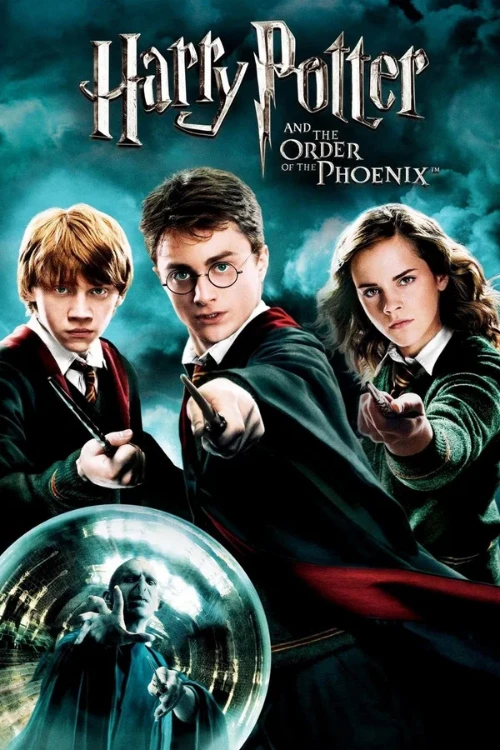
The fifth installment in the franchise, Harry Potter and the Order of the Phoenix, marks a significant shift toward a sleek psychological and political thriller. Taking the helm for the first time, director David Yates introduces a colder, visually refined tone that captures the lingering dread of an impending war. Haunted by the trauma of Cedric Diggory's death and feeling increasingly isolated from his allies, Harry’s internal psychological struggle forms the core emotional anchor of the story.
This entry stands out for its sharp social and political subtexts. Imelda Staunton delivers a masterclass performance as Dolores Umbridge, creating one of the most infuriating and memorable antagonists in modern cinema. The Ministry of Magic's state-sponsored denial, media censorship, and totalitarian control over Hogwarts ground the narrative in compelling real-world themes. In response to this oppressive regime, the formation of Dumbledore’s Army beautifully highlights themes of solidarity, youth empowerment, and active rebellion.
Visually and structurally, Order of the Phoenix delivers high-caliber spectacle along with deep emotional weight. The climactic battle within the Department of Mysteries, the devastating loss of Sirius Black, and the spellbinding duel between Dumbledore and Voldemort represent some of the absolute visual high-water marks of the entire saga. By streamlining a massive source novel into a focused, fast-paced narrative, the film seamlessly sets the stage for all-out wizarding warfare.