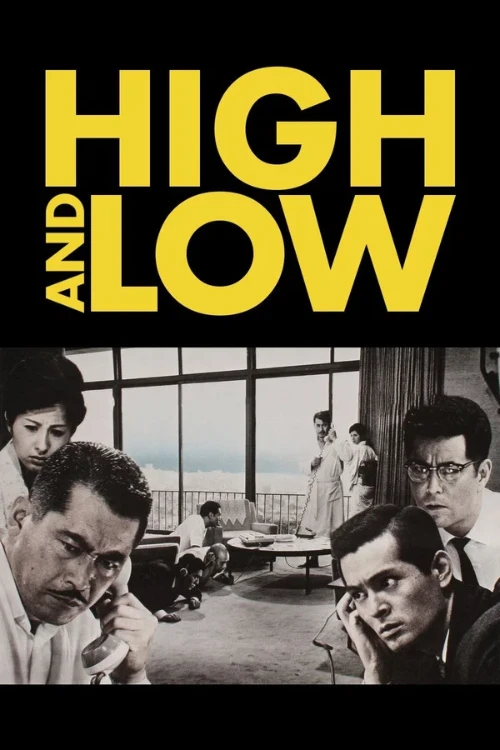
A wealthy businessman is told his son has been kidnapped and he will have to pay a very large sum for him to be returned safely. It is then discovered that his son is safe at home: the kidnapper took his chauffeur's son by accident. The kidnapper says this makes no difference: pay up or the child dies. This leaves him with a moral dilemma, as he really needs the money to conclude a very important business deal.
Akira Kurosawa’s 1963 masterpiece High and Low (Tengoku to Jigoku) centers on one of the most gripping moral dilemmas in cinematic history. Kingo Gondo, an executive at a major shoe company, has mortgaged everything he owns to secure controlling interest in his company when an extortionist strikes. However, the kidnapper has mistakenly abducted the chauffeur’s son instead of Gondo's own. Gondo is instantly thrust into an agonizing existential crisis: pay the ruinous ransom to save another man's child, or protect his life's ambition and financial survival. Kurosawa elevates this premise beyond a standard crime thriller into a profound exploration of human decency, ethics, and sacrifice.
The film is brilliantly split into two distinct structural movements. The first half operates as an intensely focused, claustrophobic chamber drama inside Gondo’s hilltop mansion. Utilizing widescreen Tohoscope framing to absolute perfection, Kurosawa articulates shifts in power dynamics, guilt, and internal conflict purely through the spatial blocking of his actors. The second half abruptly descends from the pristine heights of wealth into the sweltering, gritty underbelly of post-war Yokohama. The procedural police investigation that unfolds exposes the deep class divisions and spiritual alienation generated by rapid economic modernization. The singular, haunting flash of colored smoke in an otherwise black-and-white frame remains one of cinema's most iconic visual moments.
Anchored by Toshiro Mifune’s commanding yet vulnerable lead performance, Tatsuya Nakadai’s steadfast detective, and Tsutomu Yamazaki’s venomous portrayal of social resentment, the narrative never falters. High and Low stands as an unassailable triumph of suspense, technical precision, and socio-philosophical insight.