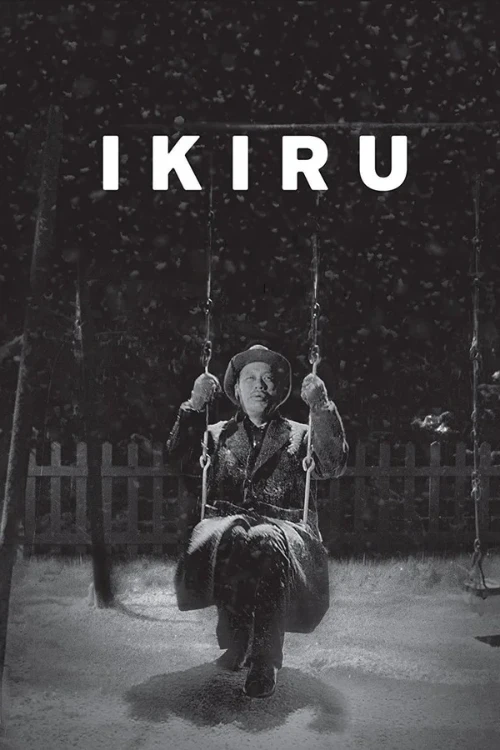
Kanji Watanabe is a civil servant. He has worked in the same department for 30 years. His life is boring and monotonous, though he once used to have passion and drive. Then one day he discovers that he has stomach cancer and less than a year to live. After the initial depression he sets about living for the first time in over 20 years. Then he realises that his limited time left is not just for living life to the fullest, but to leave something meaningful behind.
Akira Kurosawa’s 1952 masterwork Ikiru (To Live) stands as one of cinema’s most profound and moving meditations on human existence, mortality, and moral purpose. Set in postwar Tokyo, the film chronicles the life of Kanji Watanabe (Takashi Shimura), a veteran bureaucrat who has spent thirty years pushing paper without missing a single day of work, yet has essentially lived as a ghost. Upon receiving a terminal stomach cancer diagnosis, Watanabe is forced to confront the chilling truth that he has merely occupied space rather than truly lived.
Takashi Shimura delivers an extraordinary performance characterized by a fragile posture, hollowed eyes, and quiet desperation. His transformation from a numb, defeated official into a man possessed by singular purpose carries immense emotional weight. After failing to find solace in decadent Tokyo nightlife or the fleeting vitality of a younger colleague, Watanabe realizes that true redemption lies in selfless action. His quiet campaign to transform an infectious wasteland into a neighborhood playground becomes an indelible act of defiance against administrative apathy and bureaucratic stagnation.
Kurosawa’s structural daring shines in the film’s unconventional second half, shifting directly to Watanabe’s wake. Through a series of drunken recollections by his hypocritical colleagues, Kurosawa exposes societal inertia and the bureaucratic urge to claim unearned credit. Yet against this systemic cynicism stands the haunting, iconic image of Watanabe gently swaying on a swing in the falling snow, singing softly to himself in quiet peace. Ikiru remains an unforgettable humanist triumph that poses a fundamental question: what does it truly mean to live before it is too late?