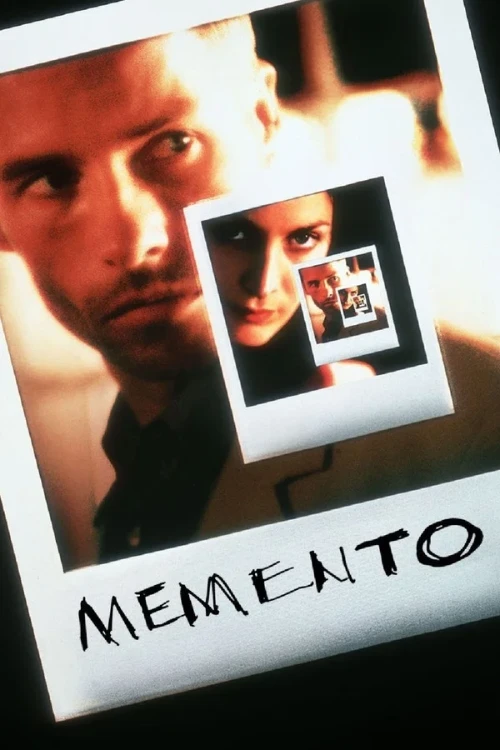
As one of the most structurally inventive works in cinema history, "Memento" stands as Christopher Nolan’s first monumental step into psychological labyrinths. Centered on Leonard Shelby, a man suffering from anterograde amnesia who is desperately searching for his wife's killer, the film transcends the boundaries of a conventional revenge story. Unable to form new memories, Leonard is forced to construct his reality through Polaroid photographs, handwritten notes, and tattoos inked onto his skin.
To make the audience experience the exact disorientation and vulnerability of the protagonist, Nolan employs a brilliant dual-timeline narrative structure. The color sequences move backward in time, while the black-and-white sequences progress forward, ultimately converging at the film's climax. Through this brilliant construct, the viewer does not merely follow an investigation; they are invited to question the unreliability of memory, the human tendency to manipulate subjective truth, and the self-deceptions forged to soften reality. Leonard's true tragedy lies not in his search for truth, but in his desperate need for an illusion to justify his existence.
Guy Pearce delivers a remarkably nuanced performance, capturing both the vulnerability and obsessed state of mind of his character. Meanwhile, the ambiguous figures portrayed by Carrie-Anne Moss and Joe Pantoliano serve as constant reminders of how fragile trust can be in a world devoid of memory. With its focused cinematography, minimalist location choices, and sharp pacing, the film maintains psychological tension throughout its entire runtime.
In conclusion, "Memento" is a defining masterpiece that delves deep into the corridors of the human mind, redefines cinematic storytelling, and offers fresh analytical layers with every rewatch.