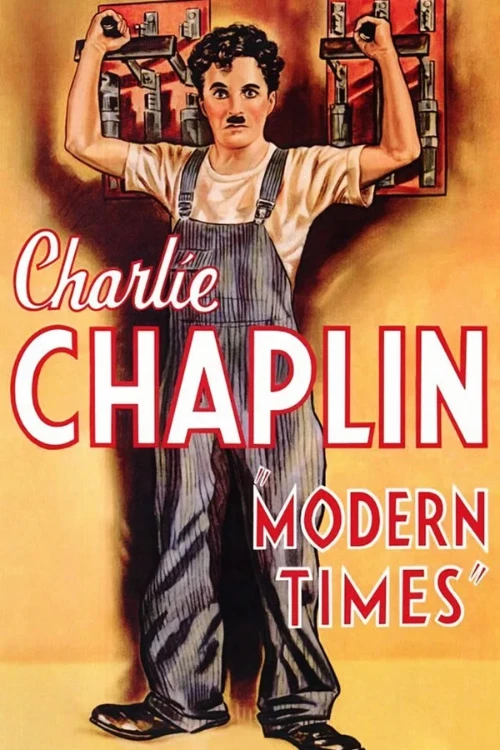
Chaplin's last 'silent' film, filled with sound effects, was made when everyone else was making talkies. Charlie turns against modern society, the machine age, (The use of sound in films ?) and progress. Firstly we see him frantically trying to keep up with a production line, tightening bolts. He is selected for an experiment with an automatic feeding machine, but various mishaps leads his boss to believe he has gone mad, and Charlie is sent to a mental hospital - When he gets out, he is mistaken for a communist while waving a red flag, sent to jail, foils a jailbreak, and is let out again. We follow Charlie through many more escapades before the film is out.
Charlie Chaplin’s 1936 legendary masterpiece, Modern Times, is a monumental cinematic achievement that uses the sharp blade of humor to examine the devastating effects of industrialization and the economic turmoil of the Great Depression on the human spirit. The Tramp’s struggle to maintain his individuality amidst the gigantic gears of a mechanized world highlights not only the socio-economic framework of the era but also the tragicomic dilemmas of humanity’s journey through modernization.
The factory sequences at the heart of the film immortalize how mechanical production dehumanizes the individual. The iconic scene where the Tramp is dragged through the giant clockwork gears serves as a brilliant metaphor for capitalism's impulse to reduce human beings to disposable machine parts. At a time when silent cinema was giving way to sound, Chaplin resisted traditional dialogue; instead, he ingeniously utilized sound technology to amplify ambient machinery noises and tyrannical authority voices, thereby preserving his universal pantomimic artistry.
The emotional bond formed with the homeless young woman, played by Paulette Goddard, breathes hope into the film's somber social commentary. The shared determination of these two destitute souls to walk forward together, despite systemic disasters and poverty, forms the humanist core of the narrative. Modern Times remains profoundly relevant today, standing as a peak of film history through its timeless comedy, sharp sociological insight, and artistic mastery.