
▶ JustWatch
Currently available to stream, rent, or buy. JustWatch helps you easily find where you can legally watch your favorite movies and TV shows online.
Stream

Rent





Buy
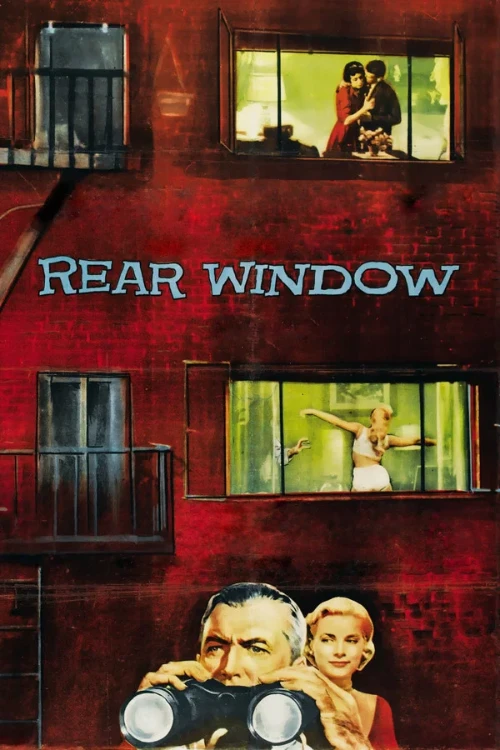
Professional photographer L.B. "Jeff" Jefferies breaks his leg while getting an action shot at an auto race. Confined to his New York apartment, he spends his time looking out of the rear window observing the neighbors. He begins to suspect that a man across the courtyard may have murdered his wife. Jeff enlists the help of his high society fashion-consultant girlfriend Lisa Fremont and his visiting nurse Stella to investigate.
Audience Reviews
Rate and Review

Directed by Alfred Hitchcock, the 1954 masterpiece "Rear Window" stands as one of the most exceptional achievements in cinematic history, brilliantly dissecting the act of observation and the complex layers of human psychology. Centered on photojournalist L. B. Jefferies (James Stewart), who is confined to a wheelchair in his Greenwich Village apartment due to a broken leg, the film transforms a single-location constraint into a monumental narrative triumph. To pass the time, Jefferies begins spying on his courtyard neighbors through binoculars and telephoto lenses—a seemingly harmless curiosity that swiftly escalates into a breath-taking thriller fueled by suspicion of murder. At the core of the film, Hitchcock embeds the theme of voyeurism, effectively turning the audience into accomplice observers alongside Jefferies. Each window across the courtyard functions like an individual movie screen, presenting distinct vignettes of the human condition—solitude, romance, heartbreak, and marital discord. The personal tension between Jefferies and his glamorous high-society girlfriend Lisa Fremont (Grace Kelly) is deeply mirrored in these surrounding domestic lives. Once Lisa becomes actively involved in Jefferies' obsession, the act of watching shifts from passive entertainment into a perilous physical venture. Technically and structurally, "Rear Window" showcases unmatched directorial mastery. By relying heavily on diegetic sound—ambient city noises and music naturally originating from the surrounding apartments—Hitchcock heightens the claustrophobic atmosphere and immerses the audience directly into Jefferies' sensory realm. Confining the camera's perspective almost entirely to Jefferies' room, the director meticulously builds tension out of spatial limitations. "Rear Window" is far more than a murder mystery; it is a timeless masterpiece that critically explores human voyeurism and the very essence of cinema itself.