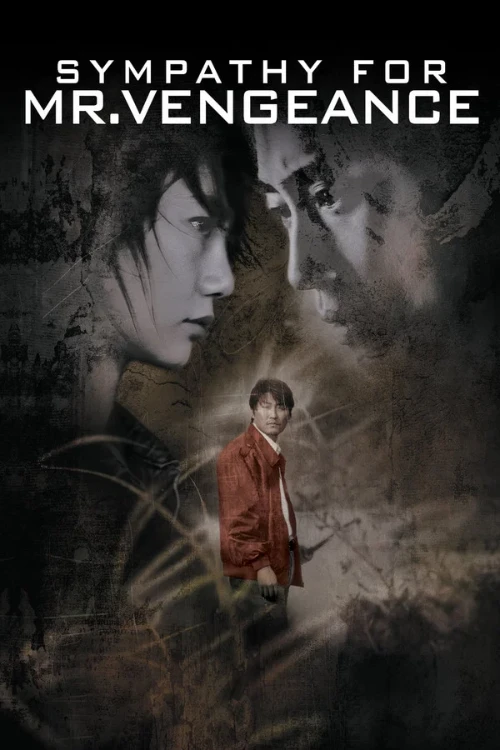
In Seoul, Ryu, a deaf worker has a sister who needs a kidney transplant. He tries to donate his own kidney to his sister, but his blood type is not compatible with hers. When Ryu is fired from Ilshin Electronics, he meets illegal dealers of organs, and the criminals propose that he give them his kidney plus ten millions Won to obtain a kidney suitable for his sister. Ryu accepts the trade, but he does not have money to pay for the surgery. His anarchist revolutionary girlfriend Cha Young-mi convinces him to kidnap Yossun, the daughter of his former employer Park, who owns Ilshin Electronics. However, a tragedy happens, generating revenge and a series of acts of violence.
As the foundational entry in Park Chan-wook’s celebrated Vengeance Trilogy, Sympathy for Mr. Vengeance strips retribution of all cinematic glamour, presenting a bleak, unrelenting, and grounded exploration of grief and moral erosion.
The narrative centers on Ryu, a deaf-mute factory laborer whose desperate bid to secure a life-saving kidney for his terminally ill sister pushes him into the clutches of black-market organ dealers. When that fails, a desperate, well-intentioned kidnapping plot spirals out of control, igniting a devastating chain reaction of violence. The film deliberately rejects clear-cut binaries of heroes and villains; each character acts on genuine suffering and perceives their actions as entirely warranted, ultimately becoming the architect of someone else’s ruin. Park refuses to romanticize the bloodshed, instead capturing its raw, heavy, and exhausting consequences.
The deliberate sound design—intermittently channeling Ryu’s silent reality—combined with stark framing and controlled pacing, creates an atmosphere of profound dread. Anchored by visceral, restrained performances from Song Kang-ho and Shin Ha-kyun, the film delivers a grim realization: vengeance offers no catharsis or closure, only absolute mutual destruction.