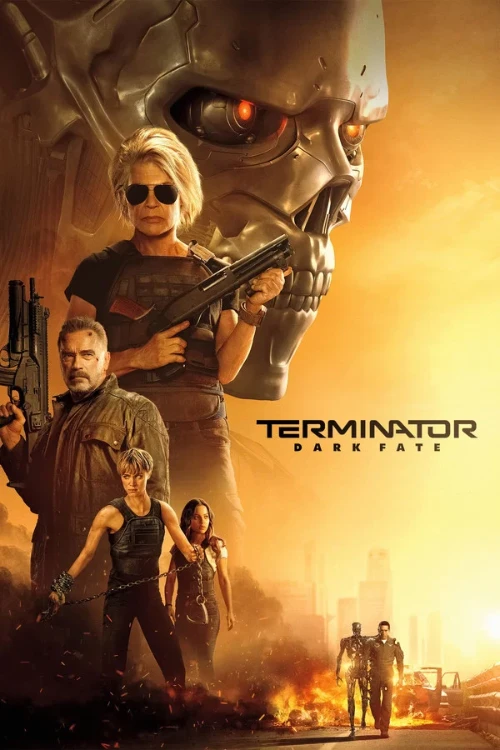
A young female Mexican worker, Dani Ramos, is hunted down by a virtually indestructible terminator from the future called a REV-9. However, she is protected by an enhanced human named Grace who is also from the future. They flee from the unstoppable terminator and, out of the blue, Sarah Connor helps them on the road. All three head to Laredo, Texas, where Grace has the coordinates of a possible support and where they meet a T-800 who is living in an isolated location with his family. The group teams up to try to destroy the REV-9.
Directed by Tim Miller and featuring the return of James Cameron as producer and story co-creator, the 2019 entry "Terminator: Dark Fate" positions itself as a direct sequel to the iconic first two films, disregarding the previous three sequels. Shifting the timeline away from Skynet to a new artificial intelligence threat known as Legion, the plot follows a cybernetically enhanced soldier named Grace, sent back in time to protect Dani Ramos from an advanced, dual-unit Rev-9 assassin.
The triumphant return of Linda Hamilton as the battle-hardened Sarah Connor alongside Arnold Schwarzenegger’s surprisingly nuanced T-800 provides the narrative with genuine emotional weight and nostalgia. Mackenzie Davis delivers a standout, highly physical performance as Grace, while Gabriel Luna instills a terrifying presence as the versatile Rev-9. However, the film's shocking opening decision risks alienating long-time fans, and despite its modern sensibilities, the overarching structure heavily relies on the familiar chase formula of its predecessors.
Ultimately, "Terminator: Dark Fate" delivers a sleek, high-octane sci-fi blockbuster with impressive visual effects and relentless set-pieces. While it does not fully recreate the groundbreaking brilliance or dark intensity of James Cameron’s original masterpieces, it serves as a worthy and entertaining attempt to revitalize a storied franchise.