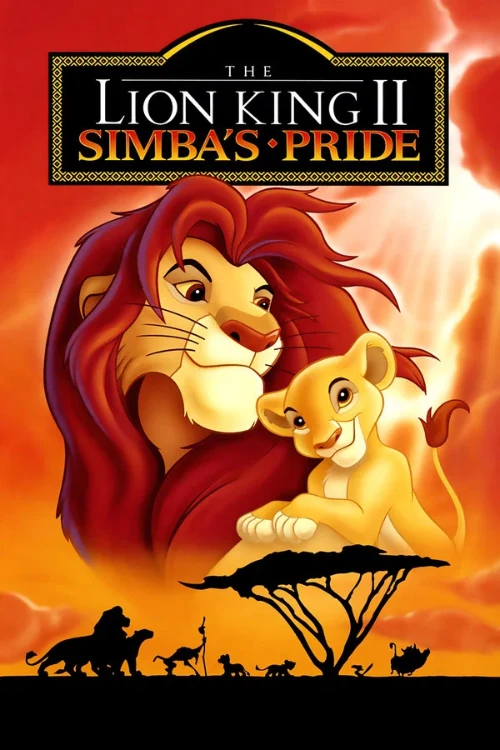
Simba and Nala have a daughter, Kiara. Timon and Pumbaa are assigned to be her babysitters, but she easily escapes their care and ventures into the forbidden lands. There she meets a lion cub named Kovu and they become friends. What she and her parents do not know is that Kovu is the son of Zira - a banished follower of the now-dead Scar. She plans to raise Kovu to overthrow Simba and become the king of the Pride Lands. This tests not only Kiara and Kovu's relationship as they mature, but Simba's relationship with his daughter.
Released in 1998, "The Lion King II: Simba's Pride" achieves an exceptional standing among straight-to-video sequels, successfully carrying forward the grand legacy of its iconic predecessor. Shifting the cinematic influence from the Hamlet-inspired narrative of the original to a Romeo and Juliet archetype, the story explores the fierce tension between the shadows of the past and the transformative power of forgiveness. The bond that develops between Simba's spirited daughter Kiara and Kovu, Scar's chosen heir raised on vengeance, emerges as a symbol of hope against the entrenched hatreds of the Pride Lands.
Although slightly behind the original in terms of visual scale and raw animation artistry, the film compensates with rich emotional resonance and compelling character dynamics. Simba's overprotective and at times prejudiced demeanor illustrates the enduring scars of his past traumas, while Zira's ruthless obsession serves as a chilling testament to the destructive nature of inherited hatred. Enhanced by a powerful soundtrack featuring memorable tracks like "He Lives in You" and "We Are One," the film reinforces its core message of unity and belonging.
Ultimately, "The Lion King II: Simba's Pride" is an emotionally resonant sequel that poignantly captures the possibility of overcoming inherited prejudice through empathy and reconciliation. By honoring the spirit of the original while forging its own meaningful path, it remains one of Disney's most solid and enduring animated follow-ups.