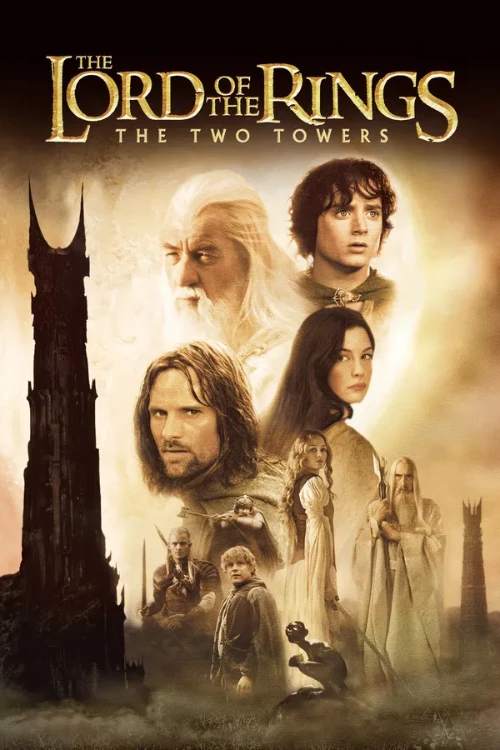
As the second chapter of Peter Jackson’s epic trilogy, The Lord of the Rings: The Two Towers builds upon the foundation of its predecessor by delivering a darker, grander, and more layered narrative. With the Fellowship shattered, the story splits into three parallel arcs: Frodo and Sam’s perilous journey across desolate lands alongside the tragic creature Gollum; Aragorn, Legolas, and Gimli’s aid to the weakening realm of Rohan; and Merry and Pippin’s encounter with the ancient Ents. This fractured structure effectively showcases the spreading shadow across Middle-earth while deepening the emotional stakes for every character involved.
Technically and artistically, the film set new benchmarks for cinema. Grounded by Andy Serkis’s groundbreaking performance capture, Gollum stands as a milestone in visual effects, capturing the haunting psychological tug-of-war between Sméagol and his corrupted alter ego. Furthermore, the Battle of Helm’s Deep remains one of the greatest cinematic sieges ever committed to film—a relentless, mud-soaked, rain-drenched masterpiece of pacing, tension, and scale.
Beyond its grand scope and battle sequences, The Two Towers excels as a poignant meditation on hope amid total despair. Samwise Gamgee’s iconic closing speech beautifully articulates the thematic core of the narrative: that even in the darkest hours, there is good in the world worth fighting for. Enhanced by Howard Shore’s evocative score and magnificent cinematography, the film transcends its status as a middle entry, cementing itself as an indelible cinematic masterpiece.