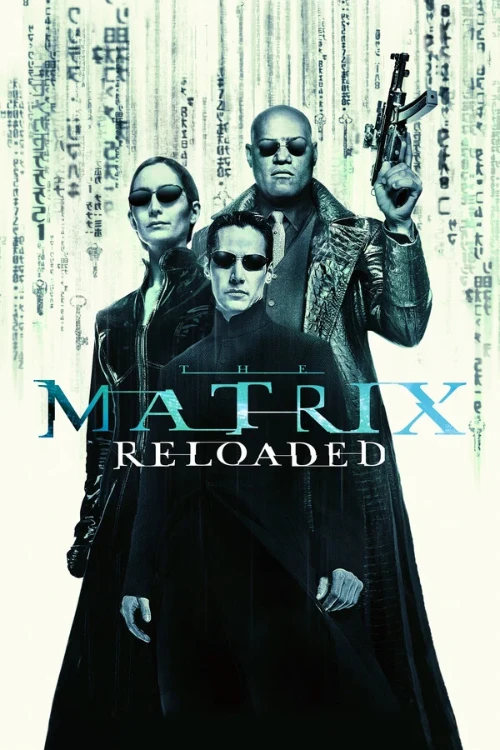
In this second adventure, Neo and the rebel leaders estimate that they have 72 hours until Zion falls under siege to the Machine Army. Only a matter of hours separates the last human enclave on Earth from 250,000 Sentinels programmed to destroy mankind. But the citizens of Zion, emboldened by Morpheus conviction that the One will fulfill the Oracles Prophecy and end the war with the Machines, rest all manner of hope and expectation on Neo, who finds himself stalled by disturbing visions as he searches for a course of action.
Directed by the Wachowskis, the 2003 film "The Matrix Reloaded" shoulder the heavy responsibility of following up one of the most revolutionary milestones in cinema history. Aiming to push the philosophical and technical boundaries set by its predecessor even further, the film expands the mythology of its universe to deliver not only a visual spectacle but also a complex narrative centered on the concepts of control, choice, and free will. The introduction of Zion into the tangible narrative and the seminal encounter with the Architect elevate the story from a personal awakening into a profound inquiry into the self-perpetuating systems of control.
From a technical and visual standpoint, the production operates on a monumental scale. The iconic highway chase sequence—for which a full-scale freeway was custom-built—remains one of the most intricate and memorable action set-pieces in cinematic history. The driving soundtrack, sharp fight choreography, ambitious use of CGI, and dynamic camera work keep the film's momentum relentlessly high. Complementing the grounded performances of Keanu Reeves, Carrie-Anne Moss, and Laurence Fishburne, Hugo Weaving shines once again as Agent Smith evolves into a self-replicating, existential virus. While its narrative is undeniably more dense and convoluted compared to the sleek simplicity of the original, it stands as a high-tier sequel that brilliantly sustains its cyberpunk aesthetic and thrilling pace.