Neo finds himself trapped between the Matrix and the Real World. Meanwhile, Zion is preparing for the oncoming war with the machines with very little chances of survival. Neo's associates set out to free him from The Merovingian since it's believed that he is the One who will end the war between humans and the machines. What they do not know is that there is a threat from a third party, someone who has plans to destroy both worlds.
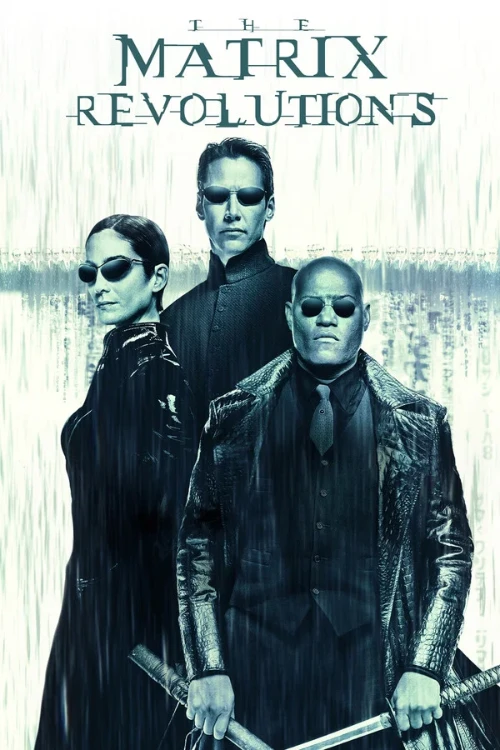
Directed by the Wachowskis, the 2003 film "The Matrix Revolutions" serves as the epic final chapter concluding one of the most influential trilogies in cinematic history. Picking up right after the high-stakes cliffhanger of its predecessor, the narrative shifts its primary focus from dense philosophical discourse toward an all-out physical war between humanity and the machines. The relentless siege of Zion and mankind's desperate struggle for survival form the visual and thematic backbone of the movie. Concepts of prophecy, sacrifice, and acceptance reach their ultimate resolution through Neo’s personal journey.
Technically and visually, the production delivers a massive war spectacle for its era. The mechanical defense of Zion, featuring Armored Personnel Units battling swarms of Sentinels, offers a chaotic and claustrophobic display of high-intensity action. The film's climax—a rain-soaked, apocalyptic duel between Neo and Agent Smith—blends superhero aesthetics with mythological symbolism to create an unforgettable sequence. Don Davis's powerful score, enriched with choral arrangements, dramatically heightens the epic tone of these moments. While it leans more toward a straightforward war narrative compared to the groundbreaking intellectual depth and stylistic innovation of its predecessors, it remains a grand finale that crowns the saga's philosophical quest with ultimate sacrifice.